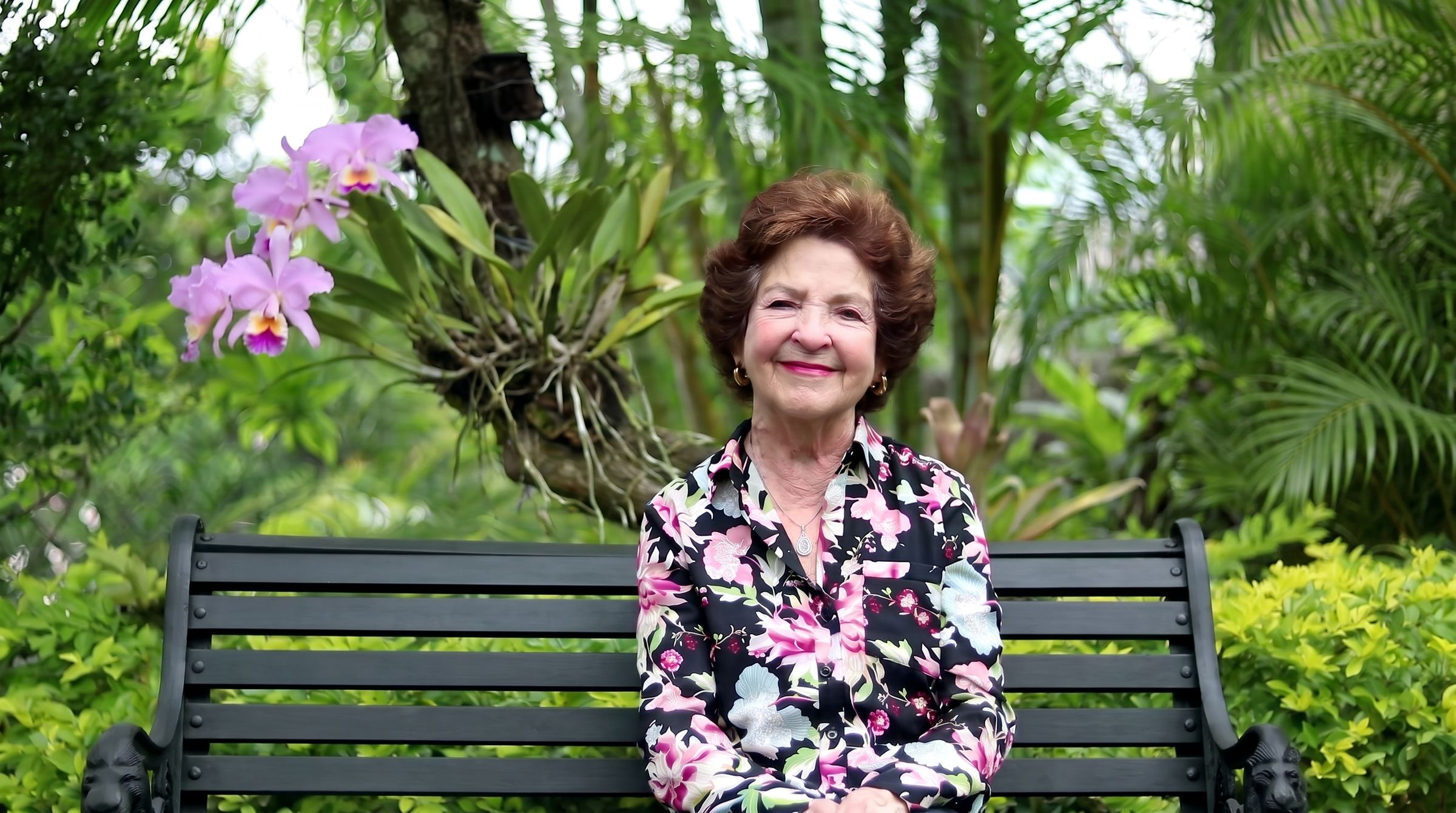
Gloria Lizarraga de Capriles, smiling, seated on a garden bench beside a flowering orchid

Gloria Lizarraga de Capriles

Valencia, May 2, 1944  ·  Caracas, March 31, 2021

«Cuando hay mística y amor a lo que se hace, todo sale.»

“When there is devotion and love in what you do, everything comes together.”

Gloria Lizarraga de Capriles

Her life

One life, many lives

She was the first mayor of Baruta, but those who loved her remember her in every one of her roles at once.

Gloria as a little girl beside her older sister Magaly
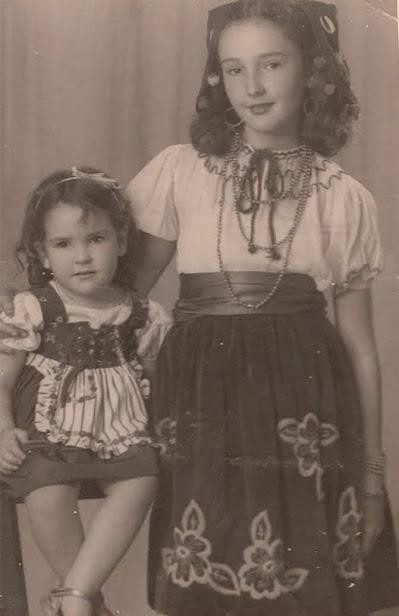
Little Gloria with Magaly, her older sister.

Daughter and sister

Valencia, faith and a big family

1944 · 1962

She was born in Valencia, Venezuela, on May 2, 1944, the youngest of the six children of Carlos Lizarraga Zuloaga and Magdalena Calzadilla. She was baptized in Valencia Cathedral as Gloria María Auxiliadora. Her siblings were Carlos Eduardo, Manuel, Magaly, Jorge and Gustavo.

At twelve she went with two friends to join Copei, Venezuela’s Christian Democratic party. The minimum age was fourteen; she insisted until they let her in. By fifteen she was a certified catechist. She finished high school at San José de Tarbes in Caracas.
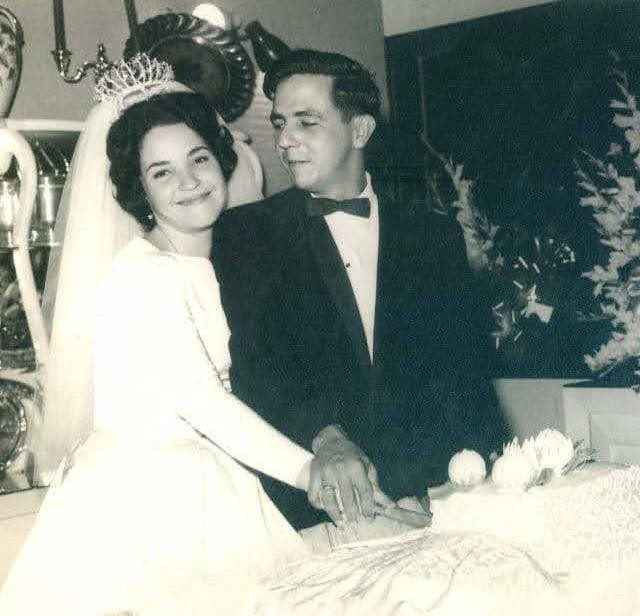
Gloria and Luis Felipe Capriles Ayala on their wedding day
With Luis Felipe Capriles Ayala on their wedding day, 1962.

Wife and mother

Seven children and a printing press

1962 · 1987

On July 21, 1962, just eighteen, she married Luis Felipe Capriles Ayala, from San Esteban near Puerto Cabello. Two years later she lost her mother, and nine months after that her father. She kept going.

They had seven children: Gloria Inés, Luis Felipe, Carlos Luis, Magdalena, Jorge Luis, Adelaida and Andrea. In 1977 they founded the Altolitho printing company together, which their children run today. They never missed one of their children’s soccer games: if she wasn’t there, he was.

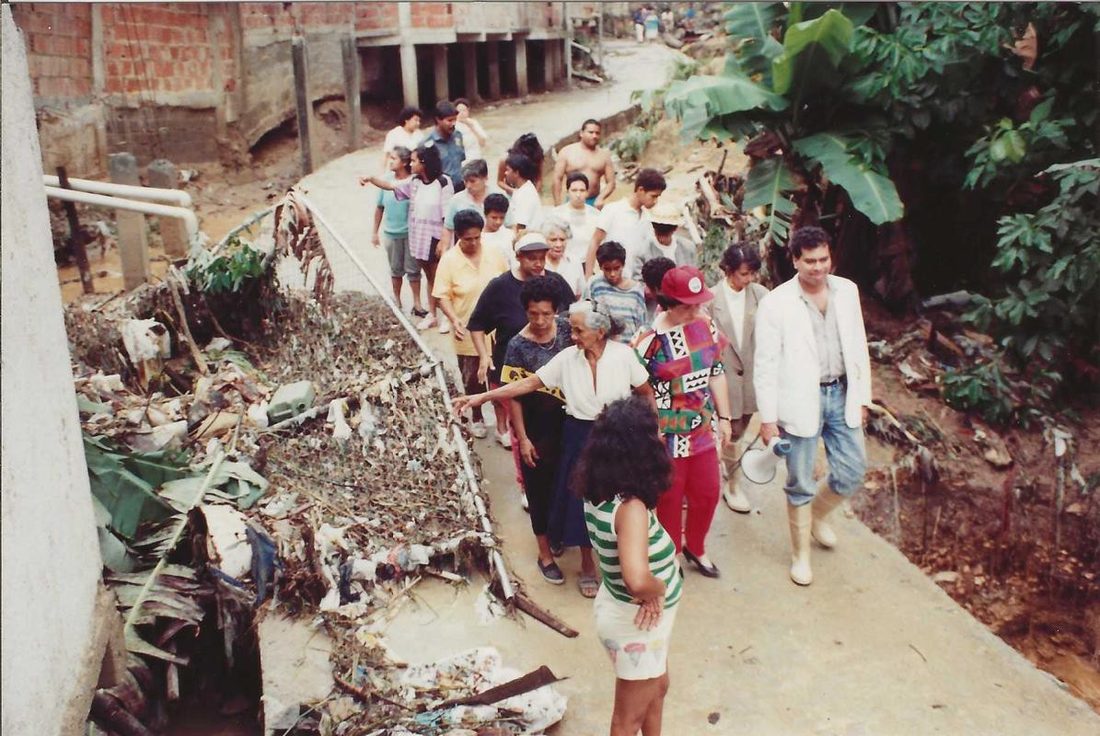
Gloria Capriles walking through a low-income neighborhood of Baruta with residents
Walking the low-income neighborhoods of Baruta.

Friend and community leader

The “barrióloga”

1980 · 1989

She founded and led the Voluntariado Nacional de Barrios, a volunteer network for poor neighborhoods. She served in the Miranda State Legislative Assembly from 1982 to 1987 and led Copei in Baruta. She would walk into Santa Cruz del Este at ten at night, and the people there looked after her.

«Aquí en Baruta siempre me echaban broma y me decían que yo era una barrióloga…»
“Here in Baruta they always teased me and called me a barrióloga, a specialist in the barrios, because I have always said that mayors, governors and presidents must work above all for the people most in need.”

Gloria Capriles in red with her young daughter Andrea on the day she took office
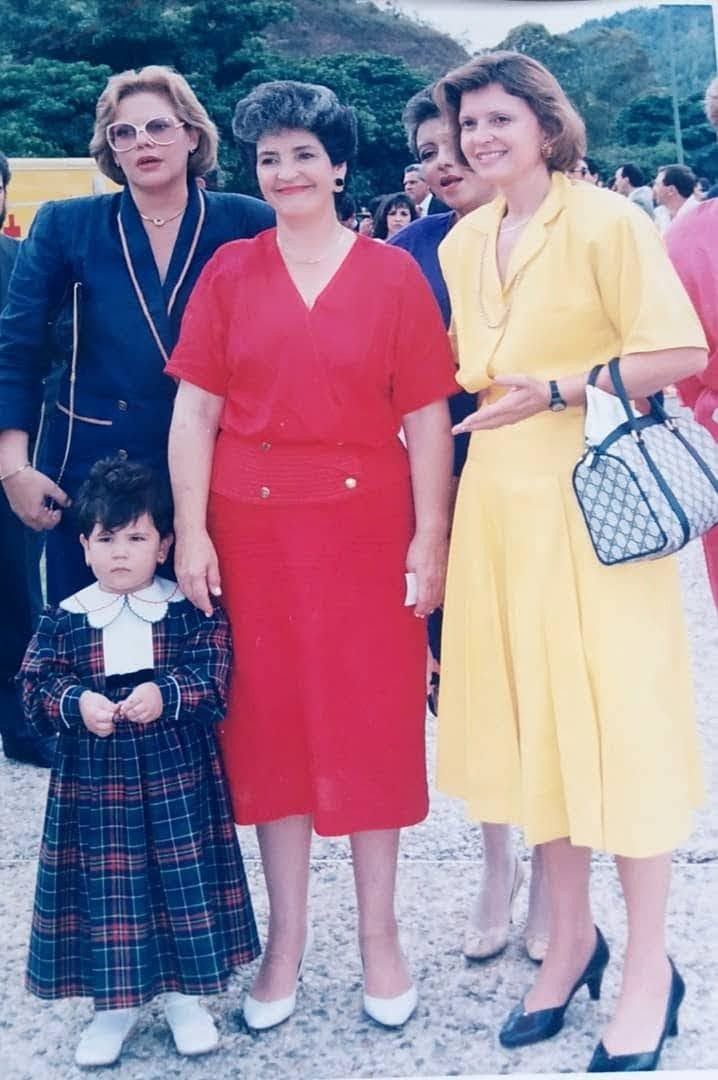
With her daughter Andrea and her colleagues at Simón Bolívar University on the day she took office, January 1990.

Mayor

The first mayor of Baruta

1989 · 1999

On December 3, 1989, in Venezuela’s first direct elections for mayors, Baruta chose her. The new municipality, in eastern Caracas, began work in a shopping-mall office at Plaza Las Américas with rented chairs and cardboard boxes for files. Neither she nor her staff drew a salary until there was revenue to pay it.

On May 2, 1990, her 46th birthday, she created the country’s first municipal police force. She lost re-election in 1992. In 1995 she won a court case defending her good name, and in 1998 Baruta and El Hatillo elected her to the national Congress.

Lawyer

The degree that waited forty years

1980s · 2003

When her eldest daughter decided to study law, she said, “I’m coming with you.” They studied together for three years at Santa María University, until Andrea was born and she had to stop. After she was widowed she went back to class and graduated as a lawyer at 59. She always told her daughters that a woman needs a professional life that makes her feel whole.

Gloria Capriles surrounded by her grandchildren at a family celebration at night
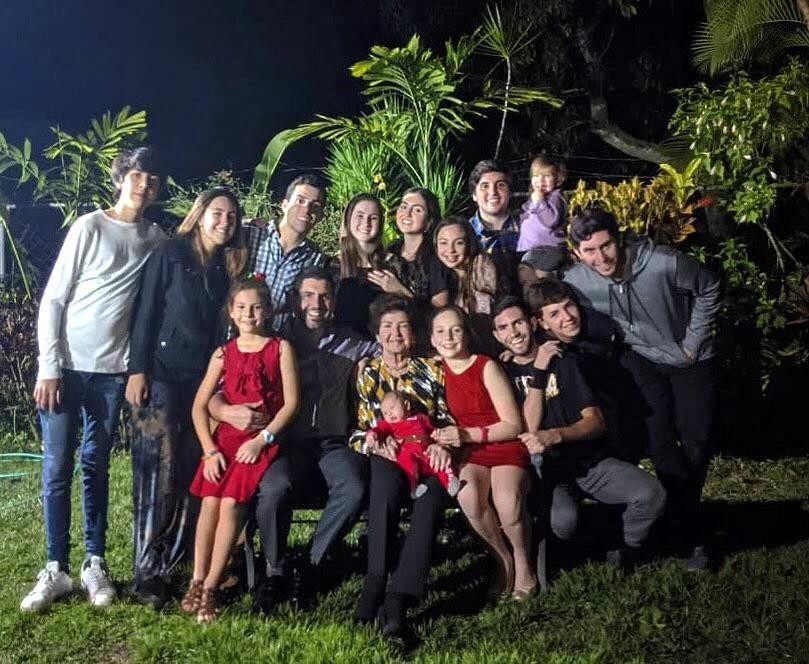
With her grandchildren.

Grandmother

The Monday, Wednesday and Friday “spa”

1999 · 2021

She buried her son Jorge Luis in 1999 and her husband in 2002. From 2014 she was on dialysis three times a week; she told her grandchildren she was “at the spa.” There she prayed the rosary and found medicines and supplies for the ninety patients of her unit.

She left twenty-two grandchildren, to whom she lent Agatha Christie and recommended history books. She died on Holy Wednesday, March 31, 2021. Humble people from Baruta came to her farewell to return her affection.

Her work in Baruta

A municipality built from nothing

What she left when she handed over the mayor’s office on January 4, 1993, according to her 1990-1992 report.

1stMunicipal police force in Venezuela, created by Decree 004 of May 2, 1990.
12 daysAfter taking office, she created PARVECI, the office for neighborhood participation.
9Free municipal outpatient clinics, renovated and equipped with ambulances.
14Care centers for seniors, serving 5,000 older adults.
401Student scholarships, from preschool to university.
6,218Athletes from 61 associations in the Neighborhood Sports Games.

She brought water, lighting and sports courts to El Rosario, Las Minas, Santa Cruz del Este, Piedras Azules and the rural areas; she built the Municipal Market and the Ricaurte Boulevard, and backed open-air farmers’ markets. In 1998 she won again in the Baruta and El Hatillo district, with 37.94% of the vote.

Timeline

Seventy-six years

  1. Valencia

  2. Born in Valencia, Carabobo State.

  3. Honor diploma from Sagrada Familia school. Joins Copei at twelve.

  4. Receives her catechist credential.

  5. Family

  6. Marries Luis Felipe Capriles Ayala.

  7. Her seven children are born, from Gloria Inés to Andrea.

  8. Her mother and father die, nine months apart.

  9. Founds the Altolitho printing company with her husband.

  10. Public life

  11. Member of the Miranda State Legislative Assembly.

  12. Baruta declares its autonomy from the Sucre District.

  13. Elected first mayor of Baruta.

  14. Takes office at Simón Bolívar University.

  15. Creates the country’s first municipal police force.

  16. Annual report: “they elected me to govern, not to please.”

  17. Loses re-election.

  18. Wins her lawsuit for moral damages against the auditing firm that, at a press conference alongside Mayor Ángel Enrique Zambrano, had questioned her administration.

  19. Resigns from Copei after 39 years of membership.

  20. Elected to the national Congress.

  21. Strength

  22. Her son Jorge Luis dies, aged 22.

  23. Her husband dies.

  24. Graduates as a lawyer.

  25. Begins dialysis.

  26. Dies in Caracas, on Holy Wednesday.

In her own words

What she said

Her words appear in the original Spanish, with an English translation.

Ese pueblo que me llevó a la Alcaldía me eligió para gobernar, no para complacer. Se me eligió para administrar un municipio nuevo, no para disipar sus esperanzas.

“The people who brought me to office elected me to govern, not to please. I was elected to run a new municipality, not to squander its hopes.”

Annual report for her second year in office, February 27, 1992

Yo aspiro a ganar por mis méritos y no por destruir a ningún contendor.

“I hope to win on my own merits, not by tearing down any opponent.”

Interview with Sofía Ímber on “Buenos días con Sofía,” Venevisión, October 26, 1989

Cuando los ideales dejan de ser comunes lo mejor es separarse.

“When ideals are no longer shared, it is best to part ways.”

Letter of resignation from Copei, October 23, 1995

Los buenos somos más, pero los malos son los que más se hacen sentir. Vamos a reunir toda la gente buena para que se apoyen mutuamente.

“There are more of us good people, but the bad ones make themselves felt the most. Let’s bring all the good people together so they can support one another.”

As remembered by her daughter Magdalena

Remembrances

How they remember her

“Gloria, how can God do this to you?” an aunt asked her at the hospital. She turned around: “What are you saying? I had the joy of my son for twenty-three years!”
Magdalena Capriles, her daughter
She was an authentic woman. What she said and what she did were the same. For me, that is the essential word.
Father José Martínez, parish priest
She was a small, slight woman, yet when she walked into a room everyone looked at her.
Carlos Luis Capriles, her son
There was an enormous person inside that small body.
Dr. Ana María Sanánez, her nephrologist
She could be at a soccer game cheering on her children and then go to a directors’ meeting at city hall that same afternoon.
Fernando Vizcaya, educator
It became like a club where, from this door inward, we were all equals, and she was one of us.
Gustavo Ruiz, fellow dialysis patient
“I’m not going to let dialysis run my life. Monday, Wednesday and Friday I have my dialysis. Tuesday, Thursday, Saturday and Sunday are my life.”
Beatriz Jaspe, friend, recalling her words
Seeing the affection when she arrived in the barrios was striking. They truly loved her.
Alessandro Sacchi, her grandson

Press archive

What was written

Press clippings, city hall publications and documents in chronological order, all in the original Spanish. Tap an image to see it in full.

October 1989

Interview with the candidate

Mujer Mujer · Tania Díaz

Dec 8-15, 1989

“Gloria Capriles, first mayor of Baruta”

La Voz del Municipio

1990-1992

A new image for the Municipal Police

Vía Municipal · Baruta City Hall

1990-1992

How the Municipal Police performed

Últimas Noticias

1990-1992

“After 25 years, Piedras Azules became a paradise when the water arrived”

Local press

1990-1992

“We created a new image for Baruta”

Baruta City Hall notice

July 1992

“Gloria de Capriles: a target.” A critical view in the middle of her term.

Exceso, p. 92

Nov 13-19, 1992

“I believe in the Baruta Municipal Police”

La Prensa

Jan 14-21, 1993

“The AD-Copei pact in the Baruta council breaks apart”

El Periódico Municipal

Mar 31, 2021

“May she rest in peace”

Baruta City Hall

«Mi compromiso es con la gente que me necesite más.»

“My commitment is to the people who need me most.” Gloria Lizarraga de Capriles, 1989